Investing · 3 min read
Sequence risk: why the first ten years of retirement decide
Two retirees, the same average return and very different outcomes. How the order of returns can break a plan and what early retirees can do about it.
Education, not financial advice. Use at your own risk. Read the full disclaimer
In short
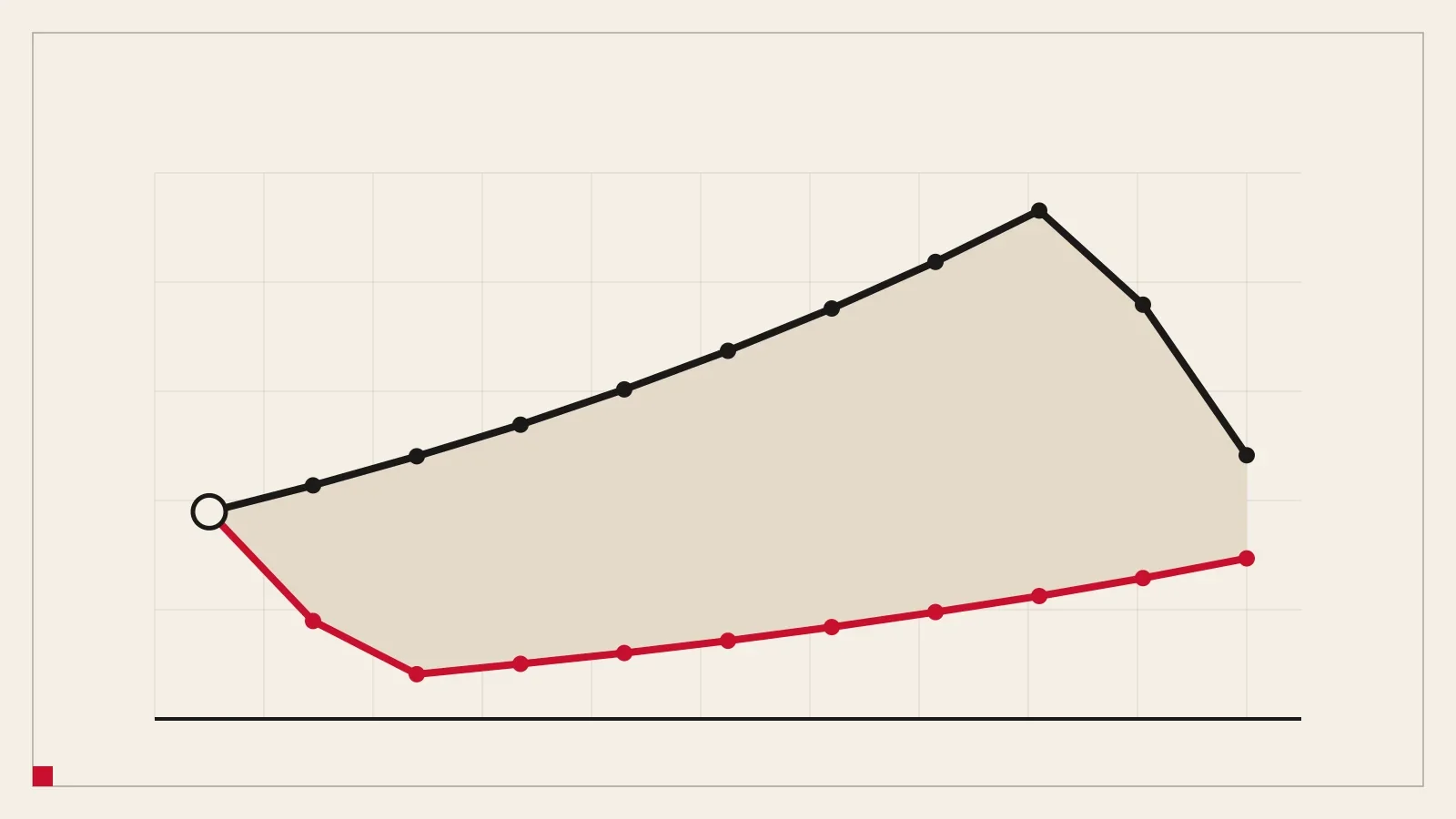
- The order of returns matters when you withdraw: the same average return can leave you with CHF 901,000 or CHF 1,120,000 after ten years.
- Bad years early in retirement do the most damage, because you sell at low prices and the loss compounds.
- A lower starting withdrawal rate, a one to three year cash buffer and flexible spending are the practical defences.
Average returns hide the danger. Two retirees can earn exactly the same average return over ten years and end in very different places, depending on the order in which the good and bad years arrived. For an early retiree with decades ahead, this is the main risk.
Two retirees, the same average
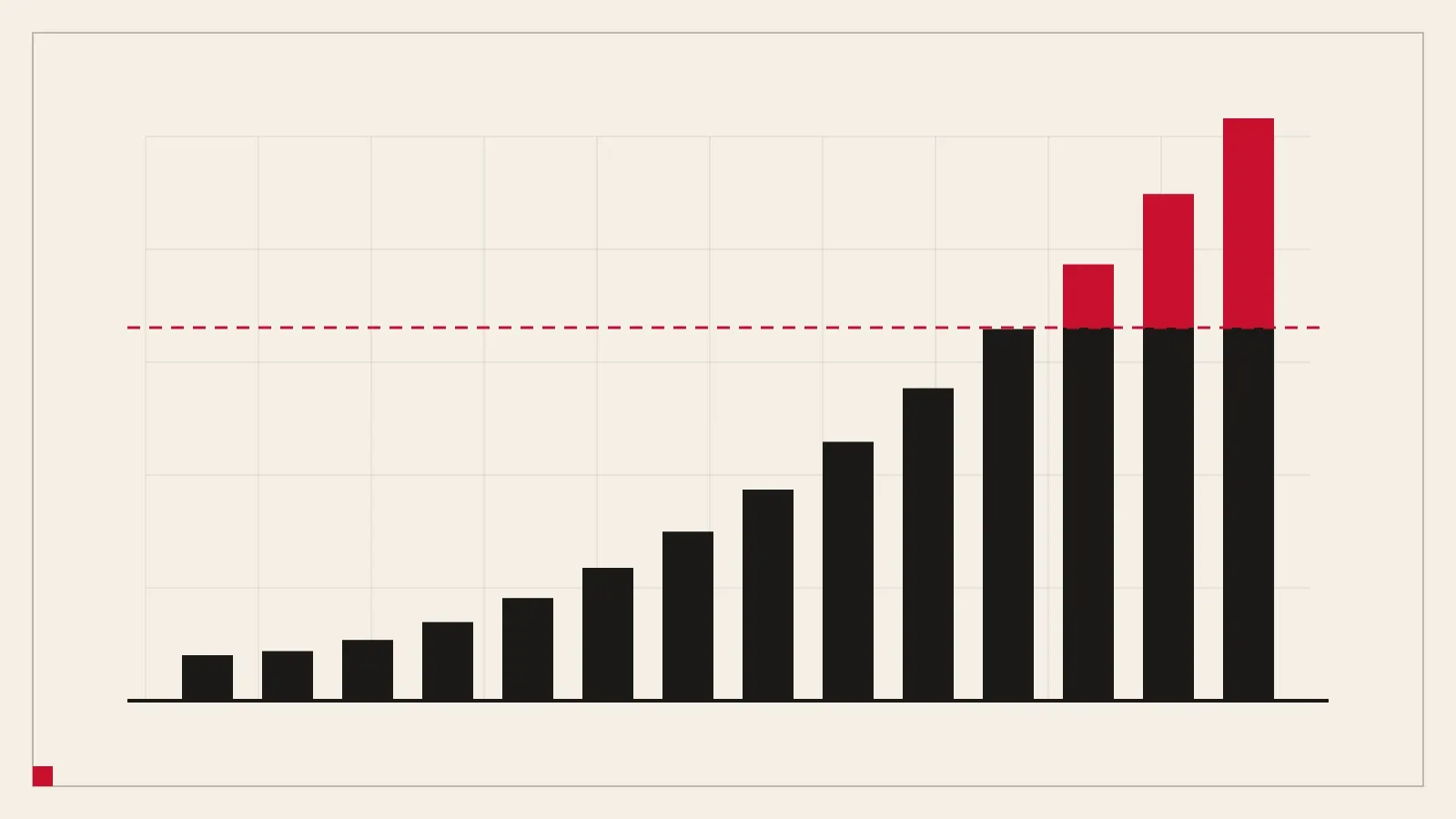
Both start with CHF 1,000,000 and withdraw CHF 40,000 a year. Both see the same ten annual returns, with an average of 5%. The returns are -20%, -10%, and then eight years of +10%.
- Retiree A gets the bad years first.
- Retiree B gets the same bad years last.
| Year | A: bad years first | B: bad years last |
|---|---|---|
| 1 | CHF 768,000 | CHF 1,056,000 |
| 2 | CHF 655,200 | CHF 1,117,600 |
| 5 | CHF 726,431 | CHF 1,341,886 |
| 10 | CHF 901,300 | CHF 1,120,295 |
After ten years, A has CHF 901,000 and B has CHF 1,120,000. The difference is CHF 219,000, with no difference in average return and no difference in spending.
Why the order matters
When the pot falls and you keep withdrawing, you sell more units at low prices to raise the same cash. Those units are gone when the market recovers. A is left with a smaller base to grow from, while B has a larger base during the good years. The loss compounds, and the effect is strongest early, when the pot is largest and the horizon longest.
Early retirees are more exposed than 65-year-olds because they live through more sequences, and they have to wait longer for a pension to take over part of the load.
Defences
- Start lower. A 3% to 3.5% first-year rate leaves more margin than 4%. See the 4% rule and why 3.5% is safer.
- Hold a buffer. One to three years of spending in cash or short bonds means you do not sell shares in a crash. The cost is a lower expected return on that part.
- Spend flexibly. Skip the inflation increase or cut 10% in a bad year. It helps a lot.
- Earn something early. Part-time income in the first years, the barista idea, reduces withdrawals when they hurt most. See lean, fat, barista and coast FIRE.
- Count your pensions. AHV and the pension fund start later and take over part of the spending. See the three pillars.
- Keep costs and concentration low. See investing in Switzerland: ETFs, domicile and fees.
What a single line hides
A calculator that shows one smooth line for your pot cannot show this risk. Test your plan in a worse case: a lower return, a lower withdrawal rate, a retirement date a year later. If it still works, you have margin. If it only works on the smooth line, you do not.
For the other side of the question, how to avoid ending with a lot unspent, read rent for life, die with zero. For the target itself, see your FIRE number.
Next step
Open the calculator and lower the withdrawal rate step by step.
Try it with your numbers
Test your plan at a lower withdrawal rate in the calculator and see what safety costs.
Starts with
- Age 48
- Spend CHF 4’000 / month
- Save CHF 3’000 / month
- Saved CHF 900’000
- Withdrawal rate 3.5%
Free and private. Your numbers stay on your device. Estimates for planning, not advice. Use at your own risk.
Keep reading
The numbers
The 4% rule, and why 3.5% is safer for Swiss early retirees
The 4% rule comes from US data over 30 years. Early retirees need longer horizons, so 3.5% is the safer start. What the rule says and what it does not.
Investing
Investing in Switzerland: broad ETFs, domicile and fees
A plain guide to a low-cost portfolio from Switzerland: why broad index funds, how fund domicile affects withholding tax and what fees do over 30 years.
Mindset
Rent for life, die with zero: spending your money on purpose
Most savers end life with far more than they needed. Why a plan that spends down on purpose can pay for more living, and the risks that stop you going to zero.
The numbers
Your FIRE number: how much is enough in Switzerland?
Multiply yearly spending by 25 to 30 for a first answer, then adjust for AHV, pension fund and Pillar 3a. A table in francs and the Swiss twist.