Mindset · 3 min read
Rent for life, die with zero: spending your money on purpose
Most savers end life with far more than they needed. Why a plan that spends down on purpose can pay for more living, and the risks that stop you going to zero.
Education, not financial advice. Use at your own risk. Read the full disclaimer
In short
- A fixed withdrawal rule usually leaves most of your capital unspent, which means you saved for money you never use.
- On CHF 1,000,000 at 65, spending down over 30 years at a 2% real return allows about CHF 44,650 a year, against CHF 35,000 under a 3.5% rule.
- Spend down in layers: lifelong pensions cover the essentials, the pot is spent on purpose, and a reserve covers long life and care.
Saving for decades creates a habit that is hard to switch off. Many people who reach independence keep saving, and end life with most of their capital. The idea of dying with zero, popularised by Bill Perkins in his 2020 book, asks a different question: what is all that money for?
The arithmetic of spending down
Say you have CHF 1,000,000 at 65 and want it to last to 95, 30 years. Compare three approaches.
| Approach | Yearly spending | What is left at 95 |
|---|---|---|
| Fixed 3.5% rule | CHF 35,000 | Most of the capital |
| Fixed 4% rule | CHF 40,000 | Often a large part |
| Spend down at 2% real return | CHF 44,650 | Zero |
| Spend down at 3% real return | CHF 51,019 | Zero |
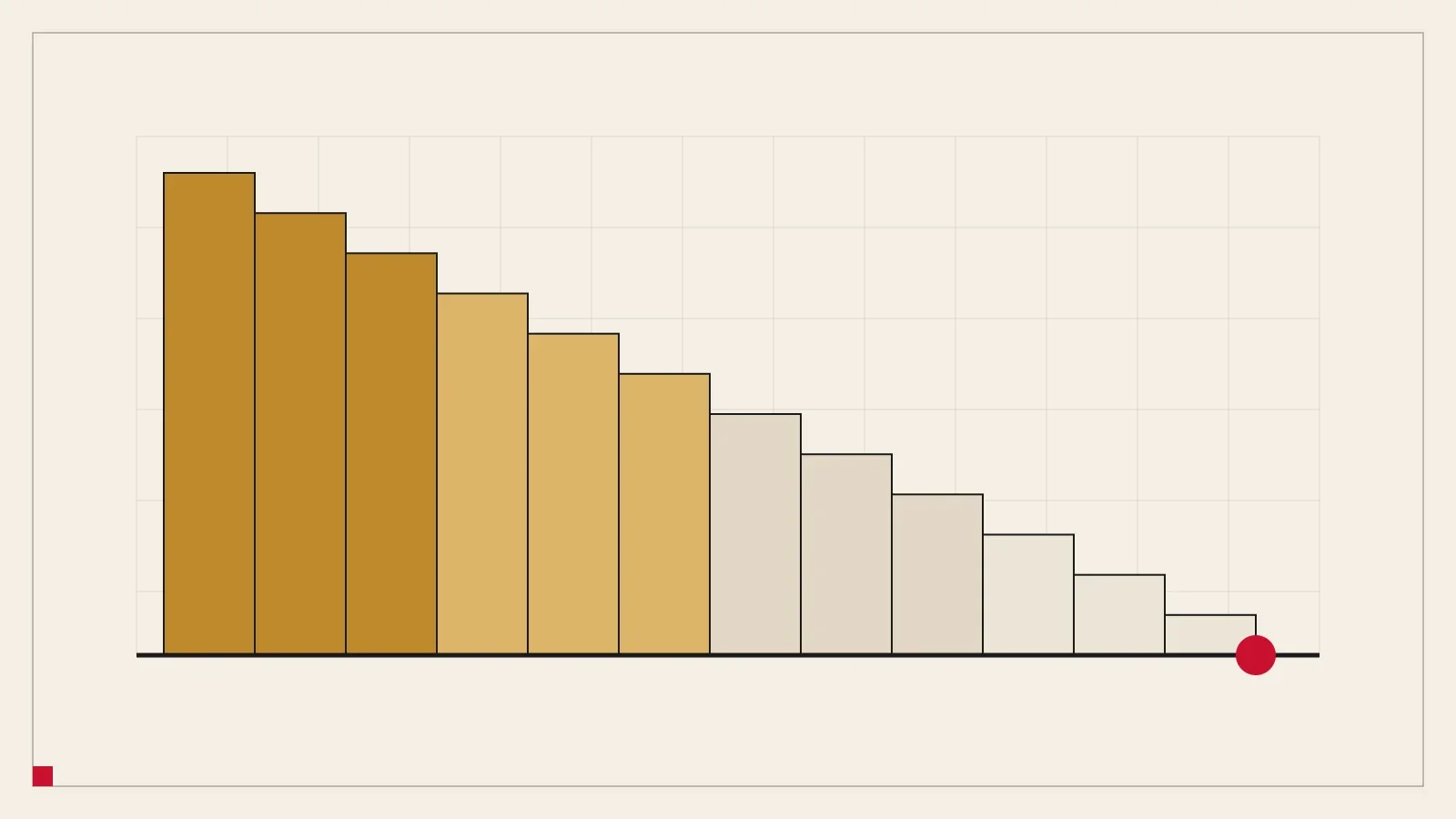
Spending down gives you about CHF 10,000 a year more, from the same pot. The gap is the cost of insisting on leaving most of it untouched. A fixed rule is built for safety, not for use.
The risk that stops people
The reason not to go to zero is simple: you do not know the date. If you plan to 95 and live to 100, the money runs out, and then you depend on the AHV alone. A good plan separates the money that must never run out from the money you can spend.
Spend down in layers
- Layer one: lifelong income. The AHV and any pension fund annuity cover the essentials for life. See the three pillars.
- Layer two: the pot. Spend it on purpose over a fixed horizon, with a withdrawal that rises as the horizon shortens. Check the rate each year. See the 4% rule and why 3.5% is safer.
- Layer three: the reserve. Keep a separate amount for care costs, a late-life spike or a long life. It can be your home or part of the pot.
At 85, review the plan. If you are healthy and the pot is large, you can spend more. If not, you have the reserve.
Renting and "rent for life"
A home is both a place to live and a store of capital. Renting instead of owning keeps the capital liquid and invested, so it can be spent. The risk is rent rising faster than your income. In Switzerland tenants have strong protections, which helps. The comparison is in rent or buy.
Dealing with risk
The main danger of spending down is a bad start. See sequence risk. You can reduce it by spending down more slowly in the early years, holding a buffer, or taking a lifelong annuity for part of the pot.
Giving earlier
If you want to leave something, giving while you are alive often helps more than leaving it at death. A gift to your children at 40 can pay for a deposit when they need it, while the same sum at 70 arrives late. Speak to an adviser about the legal and tax side before you act.
For the mindset behind all this, read you need less than you think.
Next step
Open the calculator, plan until 95, and see what you can spend.
Try it with your numbers
Set a planning horizon to 95 in the calculator and see how much you can spend each month.
Starts with
- Age 55
- Spend CHF 4’500 / month
- Save CHF 1’000 / month
- Saved CHF 900’000
- Pension fund CHF 300’000
Free and private. Your numbers stay on your device. Estimates for planning, not advice. Use at your own risk.
Keep reading
Mindset
You need less than you think: the case for a smaller number
Cutting CHF 1,000 from monthly spending can move your independence date by years. Where the money really goes and how to cut without feeling poorer.
The numbers
The 4% rule, and why 3.5% is safer for Swiss early retirees
The 4% rule comes from US data over 30 years. Early retirees need longer horizons, so 3.5% is the safer start. What the rule says and what it does not.
Investing
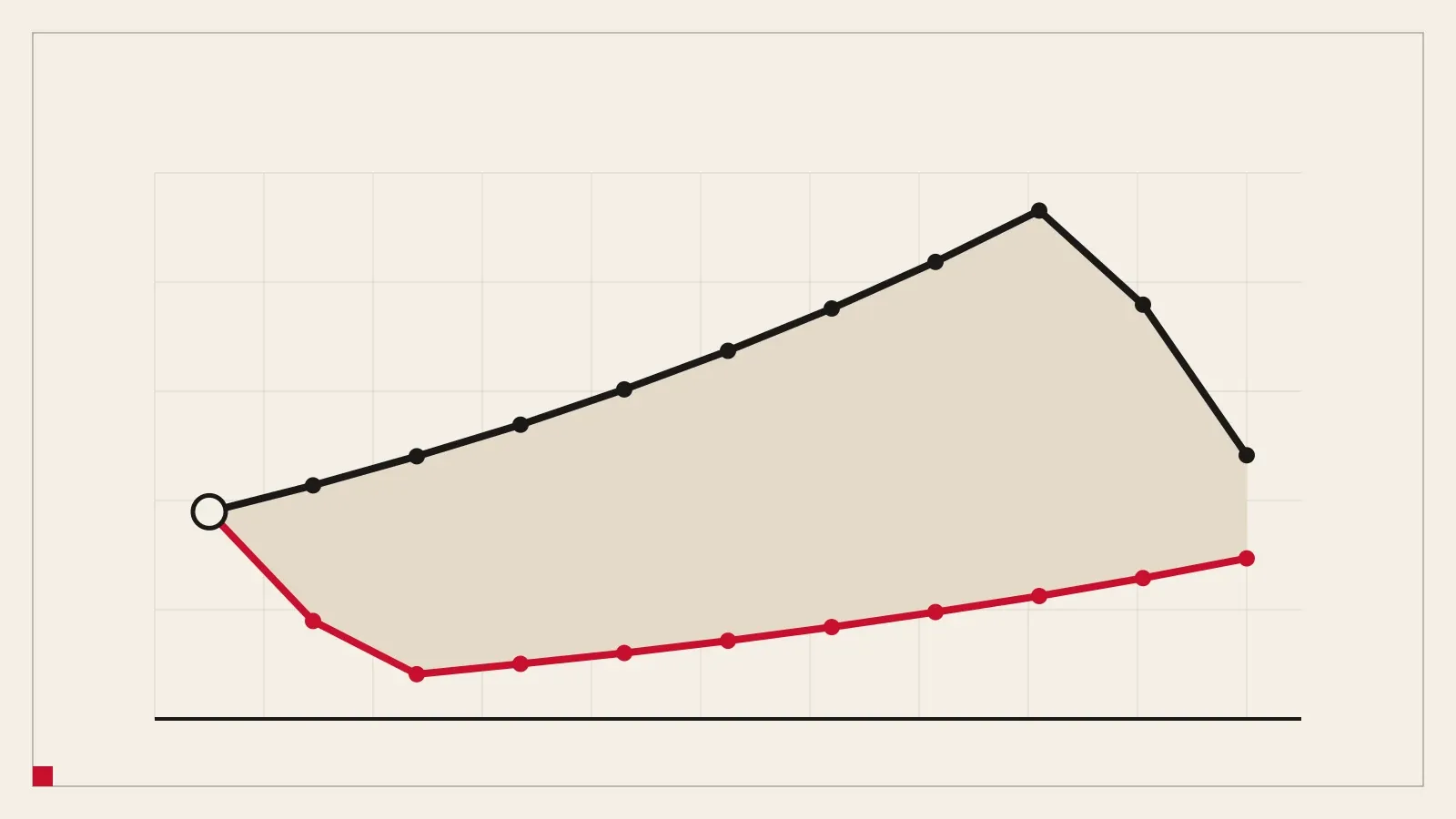
Sequence risk: why the first ten years of retirement decide
Two retirees, the same average return and very different outcomes. How the order of returns can break a plan and what early retirees can do about it.
Housing
Rent or buy if you want to retire early in Switzerland
Owning a home can lower your retirement spending or lock up the money you need. How to compare, with a worked example for a CHF 1.2 million flat.